 ❄
Major house or grower?
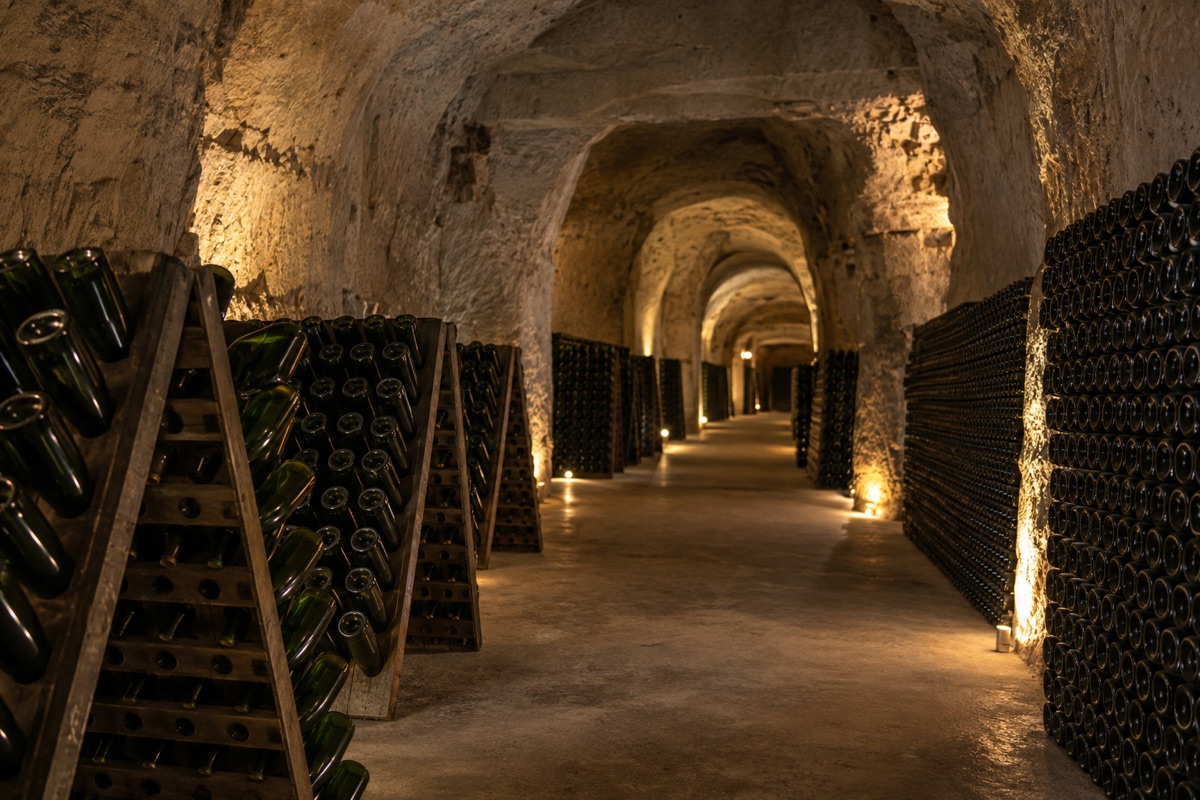
Major houses in Reims and Épernay offer architecture, scale, polished storytelling and impressive underground galleries. Growers offer a closer view of vineyard choices, family history and smaller-production cuvées.
For a first trip, combine one of each. Repeating three large-house tours often produces less insight than contrasting a house with a producer.
What winter changes
The cellar itself remains cool year-round, so the physical experience changes little. Winter affects opening days, group frequency and the outdoor portion of a visit.
Read the exact product description. Some tours remain entirely in town; others include exposed vineyard stops. Confirm language, accessibility, stairs and tasting quantity.
Reims, Épernay or the villages
Reims has the greatest concentration of monumental chalk cellars and works well without a car. Épernay places you on Avenue de Champagne and closer to Aÿ, Hautvillers and the Côte des Blancs.
Village producers are rewarding but scattered. A small-group minivan tour is usually more efficient and safer than driving between tastings.
How many visits per day?
Two substantial visits are normally enough. Leave time for lunch, travel and a Champagne bar where you can taste at your own pace.
Book the non-negotiable house first. Then choose a complementary grower or workshop instead of stacking near-identical experiences.
Source checked: City of Reims: Champagne houses and cellars · 29 September 2026.